What is the luxSensor used for?
The luxSensor measures light intensity and enables devices to be controlled automatically depending on the light level.
What is the measurement range and accuracy of the luxSensor?
The luxSensor measures illuminance within a range of 0–50,000 lx. The measurement resolution is 0.1 lx (0–10 lx) and 1 lx (10–50,000 lx), whilst the measurement accuracy is ±15 per cent.
How do you power the luxSensor?
The luxSensor can be powered via a USB-A plug (5V DC). It is also possible to power it from an external 5–24 V DC power supply, although this requires cutting the factory-fitted USB cable and connecting the power leads directly to the power source. Cutting the plug does not invalidate the warranty.
What can the luxSensor control, and how? Examples of applications.
The luxSensor can wirelessly control up to 30 other BleBox devices, automatically opening or closing awnings, shutters, roller blinds or windows when there is strong sunlight. When connected to a shutterBox controller, it enables full automation of room shading on sunny days.
In conjunction with a switchBox controller, it is possible to automatically switch on lighting, for example in a greenhouse or to illuminate a driveway.
What is the operating temperature range of the LuxSensor?
The LuxSensor controller can operate within a temperature range of -20°C to +50°C. This is the operating temperature range of the entire controller, which ensures reliable operation of the device both in extreme cold and during the summer heat.
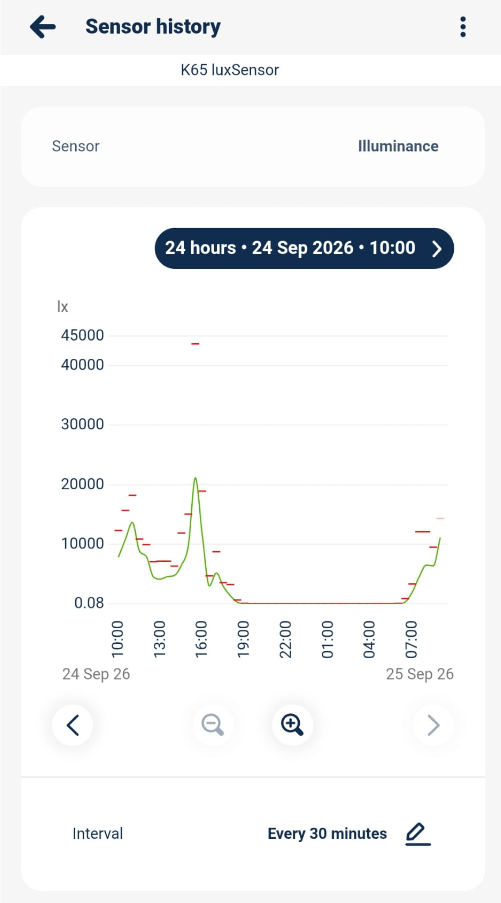
Is it possible to view the sunlight history using luxSensor?
Yes, the controllers offer full data history and interactive chart functionality. To use this feature, the controller must be connected to a Wi-Fi network. Measurement data is stored on the servers for one year, and for archiving purposes, it can be exported to .csv and .xlsx formats.
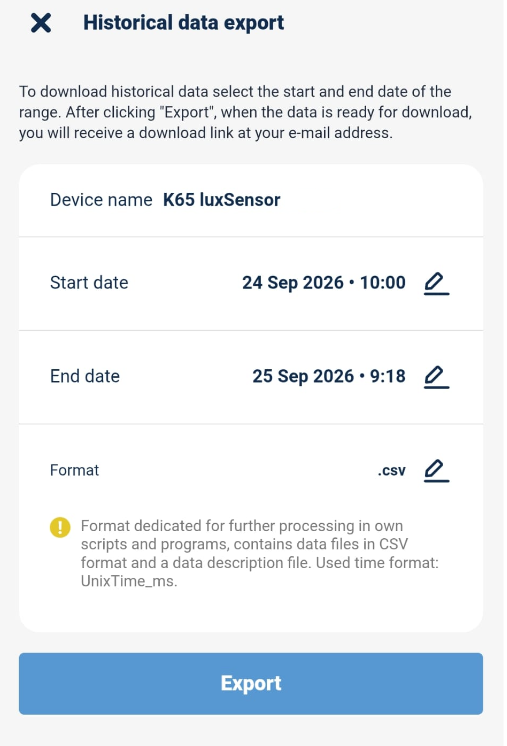
The data recording interval varies depending on the time period: for data from the last week, the interval is 5 minutes; for data from the last month, it is one hour; and after one month, data is recorded at one-day intervals.