What is the FloodSensor used for?
The FloodSensor is a Wi-Fi-enabled flood and water leak sensor that reacts to even the smallest amounts of water. The device effectively prevents damage caused by flooding by quickly detecting water and immediately raising the alarm.
How does the floodSensor alert you when it detects a leak?
If flooding is detected, the sensor alerts you in two ways: with an audible alarm via its built-in buzzer (~75 dB) and by sending a notification to your smartphone via the wBox app, following prior configuration on a Wi-Fi network.
Can the floodSensor be used repeatedly after being submerged?
The sensor has been designed for long-term use in areas exposed to water, meaning that after each submersion and drying, it is fully functional and ready for reuse. The device has an IP55 rating, which means it is fully protected against dust and protected against water jets from any direction.
Does the floodSensor require a connection to a Wi-Fi router?
Without a Wi-Fi connection, the floodSensor still effectively alerts you to flooding via its built-in 75 dB buzzer, which sounds an alarm when water is detected. In addition, the device features an open-drain wired signal output that can be connected to other building automation systems.
How is the floodSensor controller powered?
The floodSensor controller is powered by a DC voltage in the range of 5–24 V DC. The power supply is connected via the wires included in the one-metre LiYY 3×0.25mm² cable; the power supply is connected to the red/brown wire, and the earth to the black/white wire.
Is it possible to view the floodSensor’s activation history?
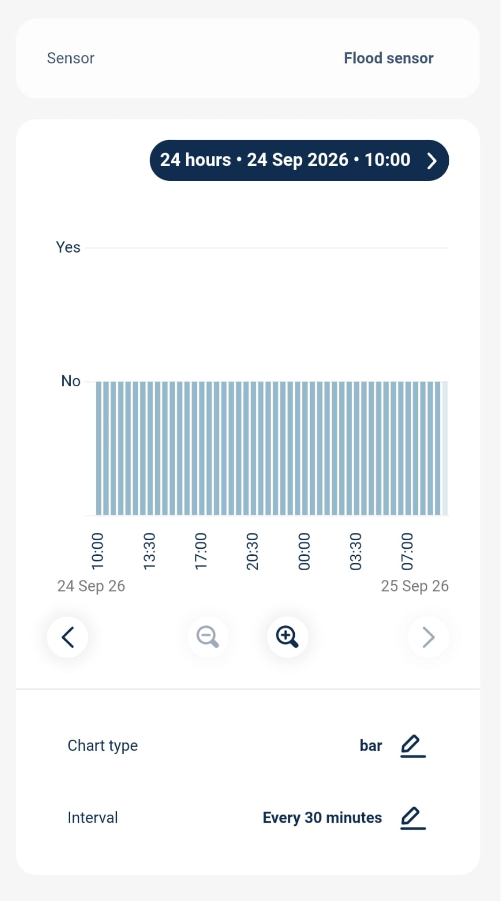
Yes, the controllers offer full data history and interactive chart functionality. To use this feature, the controller must be connected to a Wi-Fi network. Measurement data is stored on the servers for one year, and for archiving purposes, it can be exported to .csv and .xlsx formats.
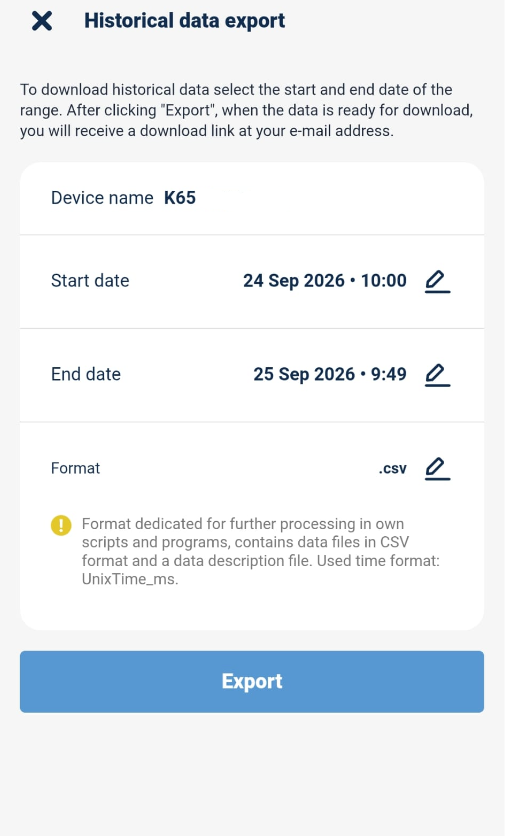
The data recording interval varies depending on the time period: for data from the last week, the interval is 5 minutes; for data from the last month, it is one hour; and after one month, data is recorded at one-day intervals.